
Websites are only ranked by search engines, when they can crawl content and feel it is trustworthy to provide that to the public.
This is precisely where Technical SEO and On-Page SEO are both critically important but serve different functions.
In this detailed guide, you will discover:
What Technical SEO is
What On-Page SEO is
Difference between Technical SEO and On-Page SEO
What does the change mean, and how will it affect rankings, AI Overview and rich snippets.
Best practices to enhance both for organic growth long term
Short Answer : Technical SEO vs On-Page SEO
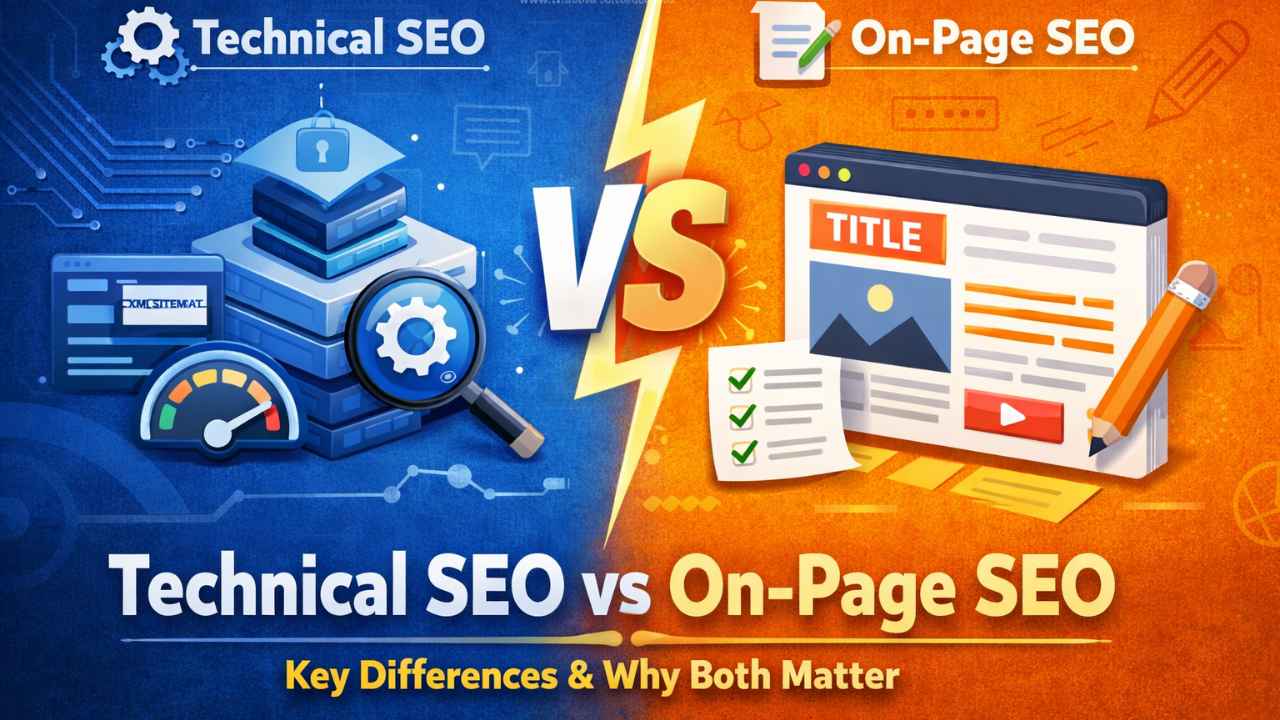
Technical SEO ensures that search engines can crawl, index and understand the site efficiently; On-Page, on the other hand, is about optimizing web pages to rank for specific keywords by making them more relevant, informative and visually appealing. Both are necessary for improved rankings and a more advanced user experience in AI-based search results.
What Is Technical SEO?
Technical SEO is the process of optimizing a website’s backend, tools, and everything else that reaches out to search engines as they crawl a site (like JavaScript or sitemaps).
It’s not going to touch content writing and keyword placements as we go along. Instead it helps your website fulfill the technical needs of current search engines, including Google.
Core Objective of Technical SEO
To make sure:
- Your website can be crawled in search engines
- Pages are indexed correctly
- The site performs as expected by users and search engine robots.
Key Elements of Technical SEO
1. Website Crawling & Indexing
Bots crawl websites on search engines. Technical SEO ensures:
- Proper use of robots.txt
- Correct implementation of XML sitemaps
- Nothing to block the wrong pages.
2. Site Speed & Core Web Vitals
Speed equals rank, and speed equals higher convert.
Key metrics include:
- Largest Contentful Paint (LCP)
- Interaction to Next Paint (INP)
- Cumulative Layout Shift (CLS)
3. Mobile-First Optimization
Because Google now indexes the mobile version of your site first, your website needs to:
- Be fully responsive
- Serve same content to mobile and desktop
- Avoid intrusive interstitials
4. Secure Website (HTTPS)
HTTPS is a ranking signal.
- SSL certificates protect user data
- Browsers trust HTTPS websites more
5. URL Structure & Canonicalization
- Clean, readable URLs
- Correct canonical tags to prevent content duplication
- Consistent trailing slashes
6. Structured Data & Schema Markup
Schema allows search engines to better understand context and facilitates:
- Rich results
- FAQ snippets
- How-to snippets
- Product snippets
7. JavaScript SEO
Ensures:
- JavaScript content is crawlable
- Critical content does not have a inímpediment to load.
What Is On-Page SEO?
On-Page SEO refers to the optimization of web pages such that they rank higher in search results and earn better organic traffic. It’s all about content quality, keyword relevance, and page structure—the bits users (and search engines) can read on the page.
In simple terms:
On-Page SEO is essentially what search engines learn about your page and why it should rank.
Core Objective of On-Page SEO
To clearly signal:
- What a page is about
- Which Keywords it should be ranked for
- Why it should be ranked higher than its competitors
Key Elements of On-Page SEO
1. Keyword Research & Search Intent
Effective on-page SEO starts with:
- Primary keyword targeting
- Secondary and semantic keywords
- Knowing the intent of users (informational, navigational or transactional)
2. Title Tags Optimization
- Include primary keyword
- Keep under 60 characters
- Make it click-worthy
Example:
Technical SEO vs On-Page SEO: The Difference and How to Master Them Both
3. Meta Descriptions
- Improve Click Through Rate (not a direct ranking factor)
- Summarize content clearly
- Include keywords naturally
4. Headings (H1–H6)
- One H1 per page
- Logical hierarchy
- Use keywords where relevant
5. Content Quality & Depth
High-ranking pages:
- Answer user questions fully
- Cover topics in depth
- Use simple, readable language
6. Internal Linking
- Distributes link equity
- Improves crawlability
- Helps users discover related content
7. Image Optimization
- Descriptive ALT text
- Compressed images
- Relevant filenames
Technical SEO vs On-Page SEO: Key Differences
Technical SEO vs On-Page SEO Although two of the most crucial aspects of search engine optimization, Technical SEO and On-Page SEO focus on separate different areas. Technical SEO involves optimising the backend of a website and making sure that search engines such as Google can easily crawl, index and understand it. It involves things like website speed, mobile friendliness, HTTPS security, XML sitemaps, structured data and addressing crawling or indexing errors. Even great content won’t rank if you don’t have solid technical SEO.
On-Page SEO, however, refers to a set of web page optimization best practices that you can apply to the pages of your website in order to improve their search engine visibility and help them rank highly for appropriate search queries. Content quality, keyword optimization, title tags, meta descriptions, heading structure, internal linking and image optimization are all important factors. On-page SEO makes it easier for search engines to determine what a page is about and whether or not it is relevant to a user’s query.
Key differences in short points:
- It helps search engines to better understand your website and makes your site accessible with better performance.
- On-Page SEO increases content relevance and user experience.
- In terms of scale, technical SEO touches every page and asset on the site whereas On-Page SEO is more atomic (an individual page).
- Indexation is provided by technical SEO and ranking is given by On-Page SEO.
- Both are critical and they should complement each other to achieve improved rankings, rich snippets and long-term organic growth.
How Technical SEO and On-Page SEO Work Together
There is no technical SEO and On-Page SEO as separate strategies; these are two working as one in a system. Technical SEO forms the framework that search engines such as Google use to crawl, index and make sense of a website, On-Page SEO ensures each of those indexed pages are relevant, worthy of ranking for specific search queries. If one suffers, so does overall SEO.
Technical SEO is ensuring that your site is technically sound — fast loading, mobile friendly, secure and devoid of crawl or indexing issues. That means search engines can reach all important pages easily. Once search engines can correctly read a page, On-Page SEO enters into the scene by making it obvious what that page is about in terms of content optimization, keywords, headings and internal links.
How They Work Together
- Technical SEO This has to do with making sure your pages are crawlable and crawlable.
- And on-page SEO is what you do on the actual content of those pages to rank them for target keywords.
- Technical SEO contributes to faster and more stable websites, which in turn enhance user experience
- Longer On-Page SEO techniques This on page search engine optimization tactics improve the content clarity as well as engagement.
- One additional thing that technical SEO does is provides for structured data and rich results
- On-Page SEO offers explicit insight into featured snippets and AI visibility
In simple terms:
- Technical SEO kicks the door open for search engines
- On-Page SEO makes them want to rank what you have to say
Applied together, they result in higher rankings and higher visibility in AI-based search results and long-term organic growth.
Impact on AI Overview & Rich Snippets
AI Overview and rich snippets of course rely upon combination of good Technical SEO as well as On-Page SEO. With the AI search systems we are developing, we aspire to provide fast, accurate and well-structured replies directly from the SERP. In order to be included in this volume, websites need to be easily crawlable and well ordered with high volumes of content.
Technical SEO comes into play on a fundamental level by making sure search engines, such as Google, can easily crawl and interpret website data. Also, clean site architecture, fast loading times, mobile optimization and structured data aid AI systems in accurately extracting information and representing them as rich results.
On-Page SEO supports / validates this process, by being clear about it and meaning to it. Well-written posts, each with a clear heading and definition along with questions like sections that help AI models determine what information may be most reliable or relevant to present in the form of an AI Overview panel or Featured Snippet.
Effect on AI Summary and Rich Snippets
- Structured data (FAQ, How-To, Product schema) can be implemented via Technical SEO
- Fast page speed enhances rendering on AI Specialist as well as eligibility
- Clean indexing of critical pages is guaranteed
- On-Page SEO provides direct answers to the questions users have.
- AI can understand which sections of content are important with optimized headings
- Semantic keywords improve topic understanding
In summary:
- Technical SEO – AI can read and interpret one another’s opinions about your site.
- On-Page SEO assists AI in selecting your content as the right answer
Combined, they offer a much better opportunity of ranking in AI Overview, featured snippets and other advanced search results.
Best Practices to Improve Both (Advanced SEO)
Accelerating Technical & On-Page SEO simultaneously needs an advanced system based approach. Current search engines, such as Google or DuckDuckGo, and AI-based ranking systems favor websites that are technically robust with easy to use content. When you take idea from one sector, rank growth is limited and if you optimize both it results in long-term ranking stability and high visibility.
From a technical standpoint, your site must be straightforward for search engines such as Google to crawl, index and render. Meanwhile, on-page optimization seeks to explain exactly what a page is for, and how relevant it is to the subject being searched for, not just from user perspectives but also those of AI systems.
How to Be Awesome at Both (Advanced SEO)
- Site Audit Pro-actively perform technical SEO audit to fix Crawl Errors, Broken links and Indexation issues.
- Optimize your Core Web Vitals, so that speed, interactivity and visual stability are improved.
- Make sure everything is fully mobile-first compatible and HTTPS secure.
- Leverage structured data and schema markup to help enhance rich results and AI comprehension
- Do intent-based KW research before creating or updating content
- Create thorough, human-friendly content that fully satisfies user inquiries
- Provide clear headers, summaries and internal links so that your content conveys a good structure.
- Improve titles, meta descriptions and images for more engagement
Common Mistakes to Avoid
It’s not that they don’t try, after all.They just make some mistakes. These mistakes undermine the efforts of both Technical SEO and On-Page SEO process and decrease visibility in Google and AI-generated results.
As for the technical, one of the most common mistakes is blocking valuable pages to be crawled or indexed. Other contributors to low rankings are slow site speed, lack of consideration for Core Web Vitals and not optimizing for mobile-first indexing. Without the correct canonical tags, duplicated content creates confusion for search engines and less tried-and-true ranking strength.
On the on-page side, keyword stuffing is a huge mistake that ruins readability and credibility. Publishing thin or low-quality content, disregarding search intent, and employing disorganized headings obfuscate the relevance of a page to search engines and AI systems. Click-through rates are also impacted by missing or under-optimized title tags and meta descriptions.
Key Mistakes to Avoid
- Blocking pages via robots. txt or noindex tags
- Disregarding Site Speed and Mobile-Friendliness
- Failure to use structured data when available
- Keyword stuffing or over-optimization
- Creating without search intent research
- Over-usage of H1 tags or bad heading structure
- Neglecting internal linking
Avoiding these mistakes can result in better crawlability, relevance, and qualification for rich snippets and AI Overview visibility.
Final Verdict
Technical SEO vs On-Page SEO are not in opposition, they are two sides of the same coin.
In order to rank as you should be in modern search:
- Fix technical foundations
- Create high-quality, intent-driven content
- Structure user and AI system pages
Together, they “establish and maintain long-term search visibility and AI trust”.
Frequently Asked Questions (FAQs)
What is the main difference between technical SEO and on-page SEO?
The key differentiation is that technical SEO has do with your site’s structure and crawlability, whereas on-page SEO is all about optimizing content and making it relevant for search intent.
Which is more important: technical SEO or on-page SEO?
Both are equally important. The role of technical SEO is to make your site the easiest for search engines to access, while on-page SEO ranks pages by meeting user intent.
Can on-page SEO work without technical SEO?
No. In cases where a site has technical problems such as crawl issues or slow loading times, on-page SEO might not land you in the rankings even if quality content is present.
Should technical SEO be done before on-page SEO?
Yes. You can’t simply launch with on-page SEO before you lay a technical SEO foundation.
How does technical SEO affect search rankings?
Technical SEO impacts ranking by enhancing page speed, mobile-friendliness, indexability and structured data which all go to influence trust with search engines.
How does on-page SEO help improve rankings?
On-page SEO does this by optimizing keyword placement, headings, content structure, internal links and user experience to make your chosen pages more relevant to the search query.
Can technical SEO and on-page SEO work together?
Yes. Technical SEO gives it visibility and On-Page SEO makes it relevant, which helps Google rank pages.
Does technical SEO impact AI search and AI Overviews?
Yes. To understand and leverage content in AI Overviews, including of voice search The technical elements of clean technical SEO (e.g., fast loading pages, structured data) form the basis for these AI-powered search systems to control it.
Is technical SEO a one-time task?
No Technical SEO should be audited and maintained on a consistent basis, especially when the site gets updated, algorithms get updated or performance starts getting worse.
Who should focus on technical SEO vs on-page SEO?
Technical SEO is what website owners, developers, and even some SEO pros should lean into, on-page is the area for content marketers to pour their souls.
